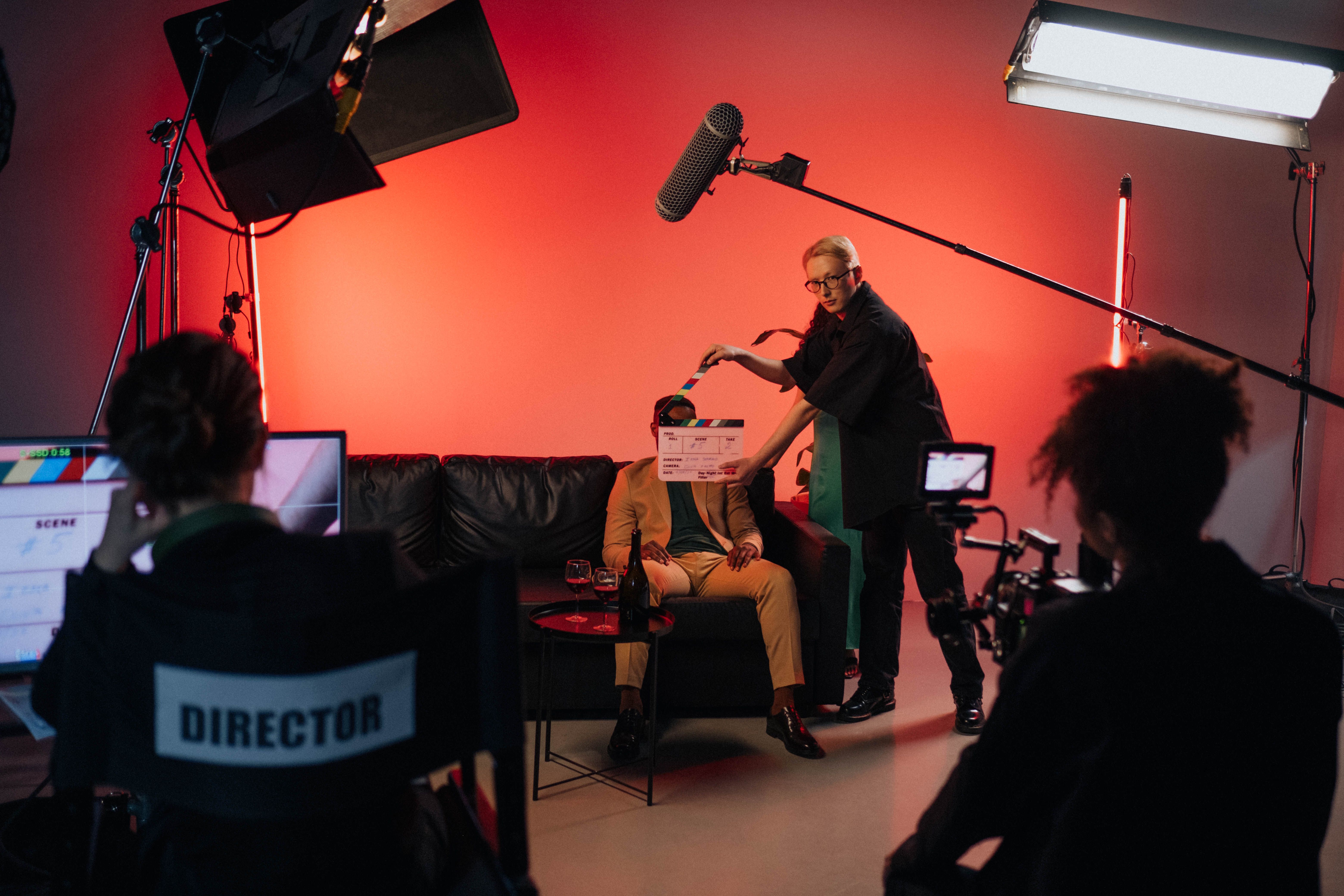

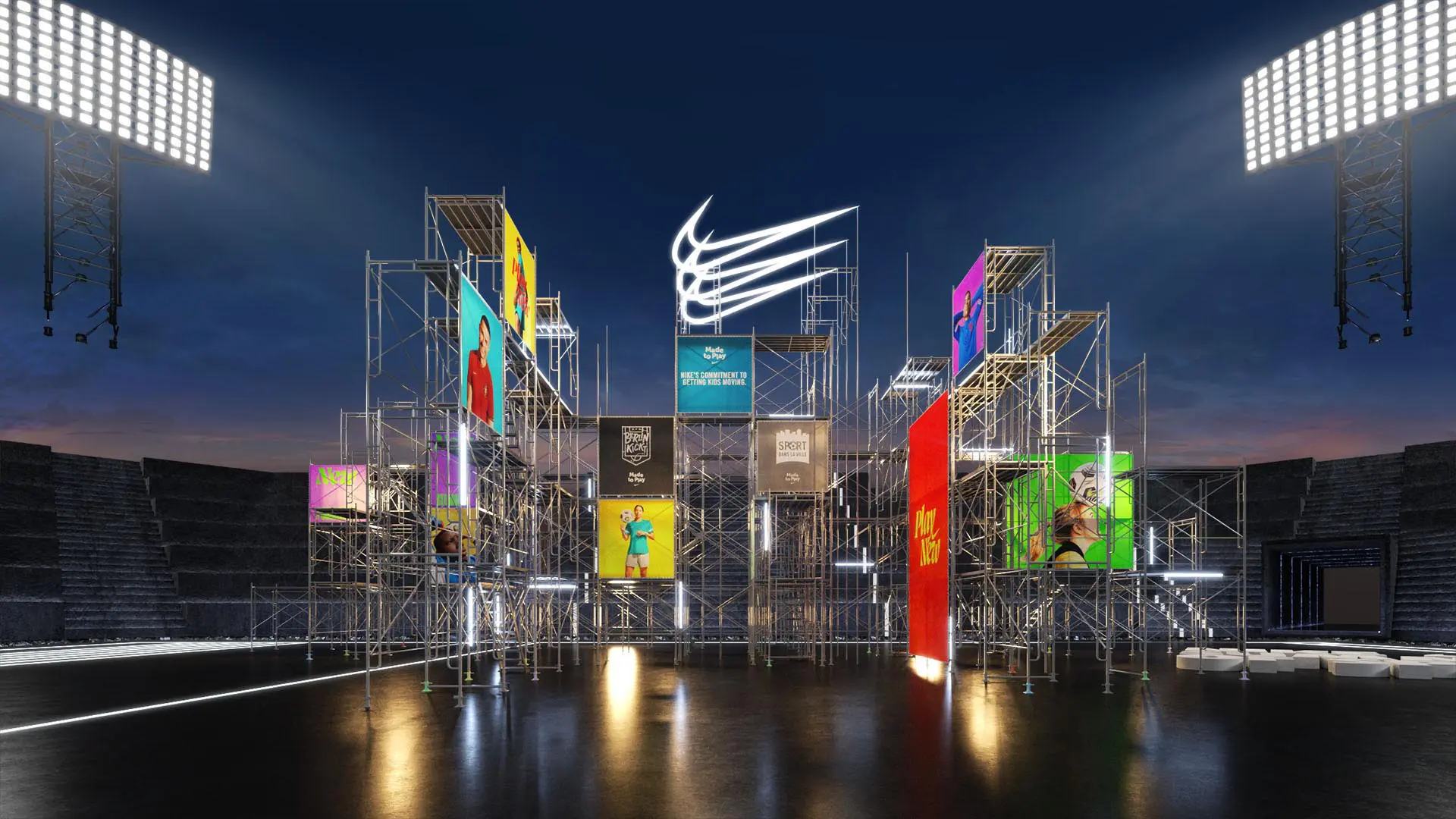
A film happens in front of you. An immersive experience happens around you — and that one preposition changes everything about how you design it. When the audience is inside the story rather than watching it, you lose the frame that normally does so much of your work, and you gain something no screen can offer: presence. Here's how we approach building experiences people step into.
From screen to space
The instinct, when a brand asks for something immersive, is to reach for the tech: projection mapping, LED volumes, real-time engines, headsets. All of that is in the toolkit. But leading with technology is how you end up with an expensive room full of screens that no one remembers. The technology is the least interesting decision. The most interesting one is what the space is for.
We start with the feeling, not the tech
Before we discuss a single fixture, we answer one question: what should a person feel in the ninety seconds after they walk out? Awe? Calm? A jolt of curiosity? That target feeling governs every subsequent choice — scale, pace, sound, light, even how people move through the space. Get the feeling right and modest technology will astonish. Get it wrong and the most advanced rig in the world will leave people cold.
If you can't describe the intended experience in a single emotional sentence, you're not ready to build it. \"A room that makes you feel small in a good way\" is a brief. \"A projection-mapped activation\" is a shopping list.
Story has to work in the round
In film, you control exactly what the viewer sees and when. In a space, you don't. People look where they like, move at their own pace, and arrive mid-scene. So the story can't be a straight line — it has to be a place with a logic, where meaning is available from any angle and rewards attention without requiring it.
We design these as environments with a clear emotional geography: a threshold that signals you're leaving the ordinary world, a centre of gravity that pulls you in, and a release that sends you out changed. The narrative is spatial. You author the journey, but the visitor authors the path.

The three layers of an immersive space
We build almost every experience in three layers, composed together:
- The envelope — the physical and projected surfaces that define the space. Walls, floor, scrim, haze, light. This is the world's skin.
- The events — the things that happen in time. Reveals, swells, shifts in scale and sound. This is the world's pulse.
- The presence — how the space responds to people being in it. Interaction, tracking, sound that follows you. This is the world noticing you back.
Cheap immersive work has only the first layer — a nice backdrop. Great immersive work composes all three so the room feels alive and aware.
Designing for the body
Screens are a visual medium. Spaces are a bodily one. That means designing for things film never asks you to consider: how sound arrives from behind you, how a floor's texture changes your pace, how temperature and scale register in the gut. A drop in the low end you feel in your chest does more than any caption. The body believes what the eyes are still deciding on.
People forget what they saw in a room. They remember how the room made their body feel.— A principle we design against
Choosing technology last
Only once we know the feeling, the story and the layers do we choose tools — and we choose the least that will do the job. Sometimes that's a wall of real-time 3D. Often it's a single beautifully calibrated projector, a good sound system and a lot of restraint. The right technology is invisible; it disappears into the experience. The wrong technology is the experience, which is another way of saying there wasn't one.
Measuring something you can't rewind
Immersive work is famously hard to measure — you can't scrub back through a moment that only existed once. But you can measure dwell time, the paths people actually take, where they stop, where they photograph, and what they say in the minutes after. We instrument lightly and watch closely, then feed what we learn into the next iteration. An experience is never really finished; it's tuned.
Why it's worth the effort
Immersive experiences are more expensive, more complex and more nerve-wracking than a film. So why do them? Because presence is unforgettable in a way that watching isn't. A person who stood inside your brand's world carries it differently than a person who saw it on a phone. In an age of infinite scrolling, the thing you can't scroll past is worth building.
If you're weighing an experiential project and want to think it through with people who've made a few, come talk to us early — the best ideas come before the budget is locked.